Showing posts with label pollinators. Show all posts

Thursday, July 14, 2016

Much Ado About Mullein

You see them everywhere in the summer, tall candelabras of yellow flowers and soft, fuzzy leaves.  They're erupting from cracks in the sidewalk.  They line the highways.  They dot wildflower field.  Some even include them in their gardens.

Verbascum thapsus, or mullein, is part of the snapdragon family.  Originally native to Europe and Asia, they are now ubiquitous to North America.  Being drought-tolerant and providing flowers make them a very eco-friendly plant to have.  They starts a rosette of fuzzy leaves, and flower in their second year, before releasing seed to start the cycle anew.  

Mullein provides pollen for bees, butterflies, moths, and beetles.  It provides seeds for birds such as the goldfinch.  Ants, true bugs, earwigs, and other creatures use the plant as food, shelter, and building material.  (Perhaps the wool carder bee likes this plant to line its nest.  It does like my lamb's ear!)  The decomposing leaves at the base also feed pill bugs, who provide a great clean-up service in the garden.

Look at the happy honey bee in the first photo.  In the center, a ladybug, grasshopper, shield bug, and a four-lined plant bug.  Last, mullein in the wildflower field at ASRI Bristol, RI.


Mullein also has many medicinal uses.  I've made a tea of the leaves to use as a demulcent, useful for a phlegmy cough or mild asthma.  The leaves are also anti-inflammatory.  Both leaves and flowers can be used in a tea, the mucilage properties,  soothing irritated membranes, and saponins making coughs more productive.  (Interestingly, saponins cause respiratory arrest in fish.)  Some Native Americans have used the roots as well.

The stalk has been used to start fires and may have been used as a wick in Roman candles.  Ancient Romans called it "hag's taper."  It's also been called candlewick, bunny's ear, and flannel leaf, Jacob’s staff, Jupiter’s staff and Aaron’s rod.  Kids love to pet it.  My kid uses the leaves to make sleeping bags for her Barbies.

Sources:
Mother Earth Living
Peterson Field Guide to Medicinal Plants and Herbs
Wikipedia


SaveSave

Wednesday, May 11, 2016

What's the Buzz?


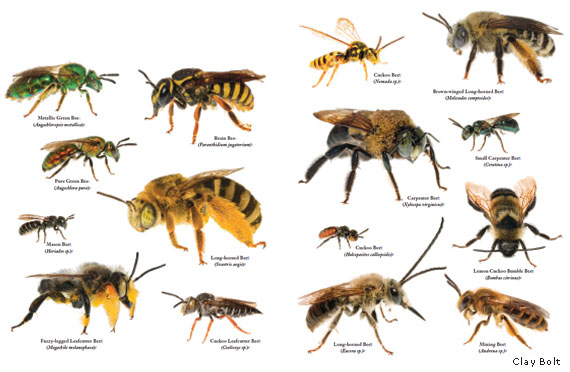
There are over 4000 species of native North American bees.  The honey bee, European in origin, is not one of them.  Native species do not live in hives, and are not generally aggressive.  They are not protecting a queen.  They may live in holes in trees, wood piles, in holes they dig underground, maybe even the bee house made by us humans.  One in three bites of food in North America is pollinated by bees.  In Rhode Island, native plants such as blueberries, cranberries, squash, and melons are best pollinated by native bees rather than honey bees.  While honey bees provide many benefits, including the health benefits of honey and in combating allergies, there's much the non-bee-keeper can do to help our native pollinators thrive.

In recent years, populations have declined.  It's difficult to know how much, as study of native bees has been limited.  The Franklin bumblebee, one of several species of bumblebees, is believed to be extinct.  The rare rust patched bumblebee, however, has been sighted in areas it was believed it disappeared from.  Citizen Scientists can report sightings to BumbleBeeWatch.org.  This guide from Clay Bolt is a good place to start.


The best way to help pollinators of all types is to provide nectar sources from native plants early spring until late fall.  Early spring flowers include dandelion, ajuga, dead nettle, chickweed, clovers, common or false strawberry, pear and apple trees.  Late spring will be azaleas, blueberries, cranberries, and many crops.  Drought-tolerant and native species such as echinacea, liatris, milkweed, thistle, and more keep nectar going through the hot summers.  Herbs left to flower are well-liked by bees in my yard, especially borage, oregano, lavender, and thyme, transitioning late summer into fall.  Sedums, goldenrod, and aster take over then, fattening up bees for the winter months of hibernation.

Other plants to consider are snakeroot/bugbane, long-headed windflower, red columbine, many milkweed species, yellow wild indigo, pink cordydalis, northern crane's bill and other geraniums,  purple-headed sneezeweed, sunflowers, lobelia, lupine, evening primrose, golden groundsel, and our state flower, the violet.  Most of these are Rhody Natives, full-sun, and drought tolerant, and all are perennial, so they will be cost-effective in not needing to be replaced each year, not require much water once established, and be disease-resistant due to their natural adaptation to our area.  Fine-tune your own list here to select for color, height, etc.

Get a FREE assessment on how pollinator-friendly your yard is by signing up with https://www.greatsunflower.org and entering data about your site.  I scored 186/210 with recommendations to include native bunch grasses and clean out my bee nesting block.  Join their challenge as a Citizen Scientist by growing lemon queen sunflowers and tracking your visitors.

Here's a great place to get untreated seeds to grow pollinator favorites here.

Check out the April/May 2016 articles at the National Wildlife' Federation's site.
URI's Garden Resource site.
Build a Bee Condo

Coming soon: Build a Bug Condo and Creating Habitats Along Highways.