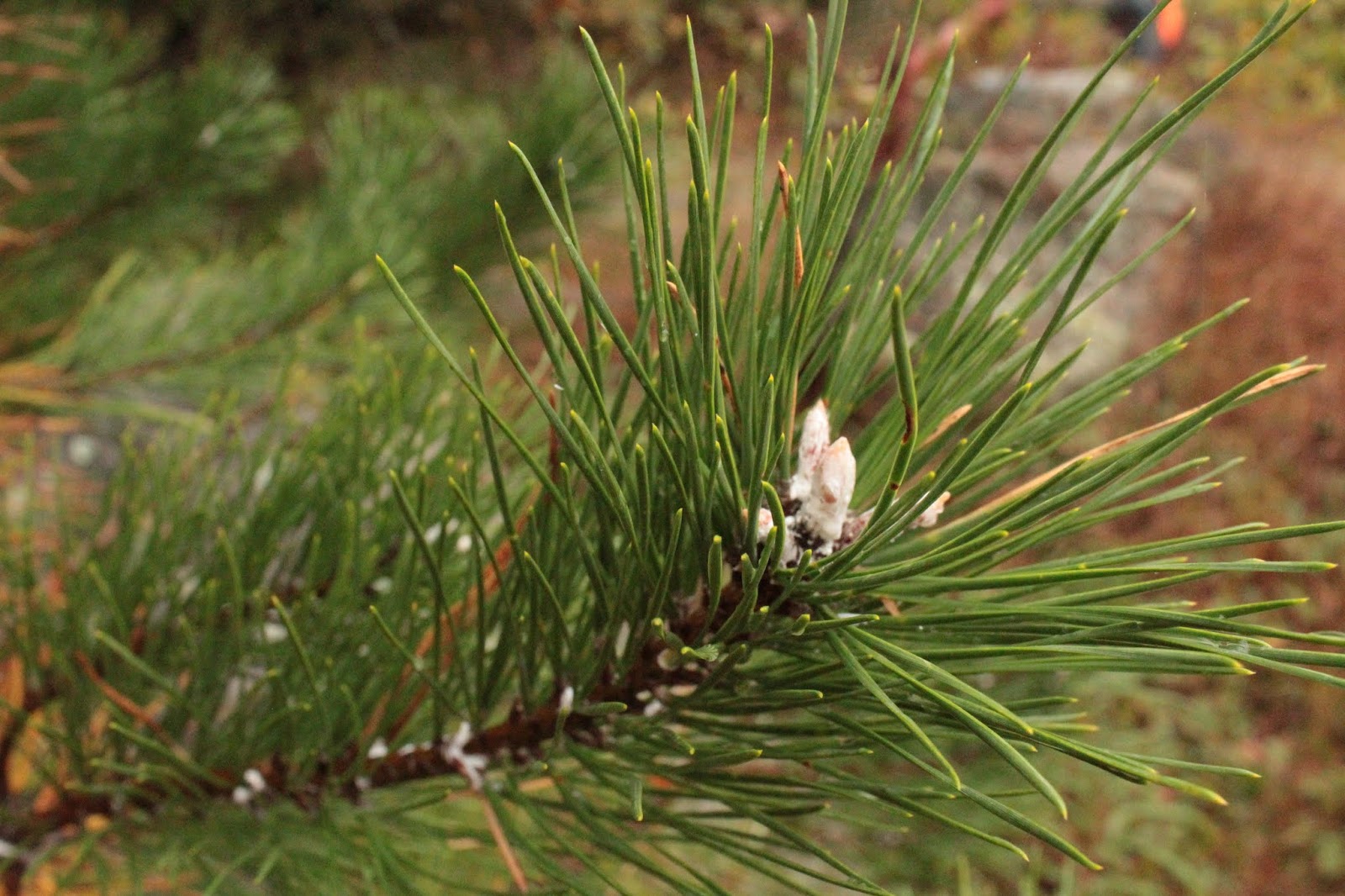
A pitch pine barrens benefits from burning. What? Is "pitch" what you get after the burn? Actually, here's the breakdown:
Pitch - the sap used on ships.
Pine - the type of conifer with long bunches of soft needles and tight cones that stay on the tree longer than any other.
Barrens - growing on poor soil, benefitting from the lack of competition after a burn.
Prescribed Burn - Controlled burn by specially trained team to keep forest healthy and maintain certain species.

Pitch pine barrens are rare in Rhode Island, with one at the Nicholas Farm Management Area and another on Prudence Island. Both are managed by controlled burns. Oak and pine frequently replace each other, pine offering habitat for animals that will drop acorns that will grow into oaks that will crowd out pines that will then shelter tiny pine seedlings as mature oaks age and decay. In the case of Nicholas Farm, there hadn't been a naturally occurring fire since the 1950's and white pine were taking over. There weren't enough of the plants wildlife needed in the understory. The burn will make room for the pitch pine, bear oak, chestnut oak, blueberry, switchgrass, and others needed by wildlife. This thicket of "early successional habitat" is perfect for nesting woodcocks and the threatened New England cottontail.
On Prudence Island, I stood on the deck listening for the whipoorwill as dusk descended. The shrill cry began. With my hiking headlamp, I traversed the woods, still hearing its call as fireflies lit up the forest. Whipoorwills need pitch pine and scrub oak for roosting, courtship, and nesting.
Pitch pine and oak barrens are also habitat for the Perseus dusky moth, active in the day. The box turtle benefits from young forests as well. It was interesting to see young quaking aspen at Nicholas Farm, their leaves enormous at this early stage, perhaps to produce food quickly to grow fast.
Learn more with the first issue of Wild Rhode Island Explorer
here.
 |
| Pitch pine cones, hanging on for years! |
 |
| I noticed many were in clusters of three. |
 |
| Young and old cones. |
 |
| Squirrels chew off branches to carry pine nuts away for the winter. This one got left behind. |

 |
| Looking down the road to the shore in the south side of Prudence Island. |
 |
| Burned area on Prudence Island, already growing in. |
 |
| After burn on Nicholas Farm. |

 |
| Switch grass. |
 |
| Sawdust at the base of this charred pine. |
 |
| Woodpecker holes or pine sawyer beetle? |
 |
| And on the other side... |
Then from the ashes... It was a wet october and mushrooms were everywhere. I assumed these were Jack o'Lanterns, a toxic mushroom that glows in the dark! But the stipe had a skirt, which jacks don't. So after some research, my best guess is Laughing Jim (Gymnopilus junonius). Also not edible! I let them be.
However, this was this gorgeous chicken mushroom on a charred oak:
 |
| That's tasty! |
More mushroom and pitch pine pics:
 |
| Pitch pine bark. |