Showing posts with label save the bees. Show all posts

Monday, May 30, 2016

Art and Science?

Insect-themed neo-Art-Nouveau by Stephanie Young.


By now, most people have at least heard of STEM to STEAM.  But what does it mean?  Science, Technology, Engineering, and Art!  It's not enough to observe, identify, hypothesize, but to DO.  In a lesson I recently developed, my second graders are building bug houses.  As the "architects", they must consider the needs of their client(s).  I narrowed it down to three for them, with brief mention of a few others.

Basically, each student is getting a $1 mini crate I got off the Michael's website and painted green with exterior paint and primer.  They then have to gather materials from home that they think will be good for their resident: twigs, leaves, bark, chunks of wood, cardboard, packing materials, etc.  I told them no rocks and to stay away from poison ivy.  All this was reiterated in their take-home instructions.

Also in the instructions were the needs of several insects.  Lady bugs often hibernate in small spaces in logs, leaf litter, dead trees, people's attics even.  They prefer horizontal openings.  (Butterflies, by contrast, need vertical openings to accommodate their wings, but I told them their crate would be too small for the space they needed to perch.  We wanted ladybugs to move in to eat the aphid pests.  The new guy I introduced them to was the lacewing.  It also eats aphids but likes to reside in dry straw.  Solitary bees, contrary to popular belief, do NOT live in hives, but hollow reeds, clumps of tall grass, holes on logs or living trees, even underground.  Since giving them this assignment, I discovered one bee that does use rocks (specifically, genus  Dianthidium in the Megachilid or leaf cutter Family uses pebbles and mud) to build its house and another (the wool carder Anthidium, also a Megachilid) that likes soft, fuzzy plants to line its nest.  They're still not getting rocks, but I'll add mullein leaves to the mix.  (I frequently see wool carders in the summer,  hovering around my rose campion, a fuzzy plant like lamb's quarters but with pink, dianthus-like flowers.  They are very fast and territorial, guarding their flowers, and very fun to watch.  Like all bees, males have no stingers.)

Building day arrives.  All but two of the kids brought in items last-minute.  Only two kids brought rocks, which I promptly removed.  I separated all the items into separate boxes: Recently living plant material (flowers and grass clippings), dry straw, twigs, sticks, bark, cardboard tubes, paper packing materials, pine cones, pussy willows, craft sticks, etc.   (Several orders of paint came in that week so I had uniform boxes.)  Originally I was going to cut up bamboo, but it was too much to do and I'm working with a fractured thumb.  We had done a lot with paper manipulation and I showed them how to roll tubes.  Their crate had to contain the objects and they were not allowed glue.  Nothing could fall out, not even hay.  The spaces in the crate did allow them to put craft sticks across, which many did, creating "floors".  When complete, they will place their bug condos outside and wait to see who moves in.


I'll admit that in the last few weeks of school the kids get rambunctious and I get less patient.  But I sent them one table at a time, with assurances they would be allowed to go back, to gather building materials for their bug condo.  For the next 30 minutes, every kid was engaged, no one fought or argued, there was plenty to go around, and one student who gets frustrated when his project doesn't look like mine said it was the best day ever!  They will continue work tomorrow and I will add more pictures to this post.  

Which brings me to NGSS, or Next Generation Science Standards.  In the kindergarten to second grade Engineering, Technology, and Science (ETS) Standard, students should:

Students who demonstrate understanding can:
K-2-ETS1-1.Ask questions, make observations, and gather information about a situation people want to change to define a simple problem that can be solved through the development of a new or improved object or tool.
K-2-ETS1-2.Develop a simple sketch, drawing, or physical model to illustrate how the shape of an object helps it function as needed to solve a given problem.
K-2-ETS1-3.Analyze data from tests of two objects designed to solve the same problem to compare the strengths and weaknesses of how each performs.


Which I believe we are doing!

Wednesday, May 11, 2016

What's the Buzz?


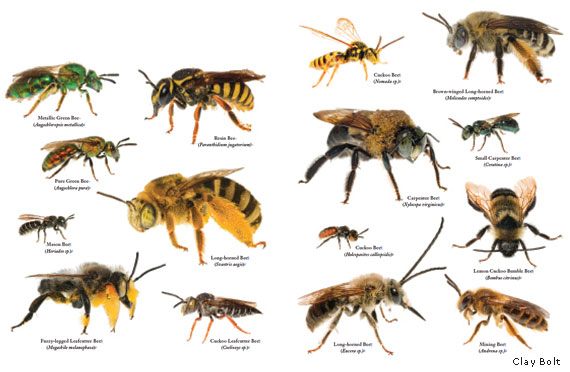
There are over 4000 species of native North American bees.  The honey bee, European in origin, is not one of them.  Native species do not live in hives, and are not generally aggressive.  They are not protecting a queen.  They may live in holes in trees, wood piles, in holes they dig underground, maybe even the bee house made by us humans.  One in three bites of food in North America is pollinated by bees.  In Rhode Island, native plants such as blueberries, cranberries, squash, and melons are best pollinated by native bees rather than honey bees.  While honey bees provide many benefits, including the health benefits of honey and in combating allergies, there's much the non-bee-keeper can do to help our native pollinators thrive.

In recent years, populations have declined.  It's difficult to know how much, as study of native bees has been limited.  The Franklin bumblebee, one of several species of bumblebees, is believed to be extinct.  The rare rust patched bumblebee, however, has been sighted in areas it was believed it disappeared from.  Citizen Scientists can report sightings to BumbleBeeWatch.org.  This guide from Clay Bolt is a good place to start.


The best way to help pollinators of all types is to provide nectar sources from native plants early spring until late fall.  Early spring flowers include dandelion, ajuga, dead nettle, chickweed, clovers, common or false strawberry, pear and apple trees.  Late spring will be azaleas, blueberries, cranberries, and many crops.  Drought-tolerant and native species such as echinacea, liatris, milkweed, thistle, and more keep nectar going through the hot summers.  Herbs left to flower are well-liked by bees in my yard, especially borage, oregano, lavender, and thyme, transitioning late summer into fall.  Sedums, goldenrod, and aster take over then, fattening up bees for the winter months of hibernation.

Other plants to consider are snakeroot/bugbane, long-headed windflower, red columbine, many milkweed species, yellow wild indigo, pink cordydalis, northern crane's bill and other geraniums,  purple-headed sneezeweed, sunflowers, lobelia, lupine, evening primrose, golden groundsel, and our state flower, the violet.  Most of these are Rhody Natives, full-sun, and drought tolerant, and all are perennial, so they will be cost-effective in not needing to be replaced each year, not require much water once established, and be disease-resistant due to their natural adaptation to our area.  Fine-tune your own list here to select for color, height, etc.

Get a FREE assessment on how pollinator-friendly your yard is by signing up with https://www.greatsunflower.org and entering data about your site.  I scored 186/210 with recommendations to include native bunch grasses and clean out my bee nesting block.  Join their challenge as a Citizen Scientist by growing lemon queen sunflowers and tracking your visitors.

Here's a great place to get untreated seeds to grow pollinator favorites here.

Check out the April/May 2016 articles at the National Wildlife' Federation's site.
URI's Garden Resource site.
Build a Bee Condo

Coming soon: Build a Bug Condo and Creating Habitats Along Highways.